Banque Cantonale de Fribourg - Succursale de Düdingen
The project in detail
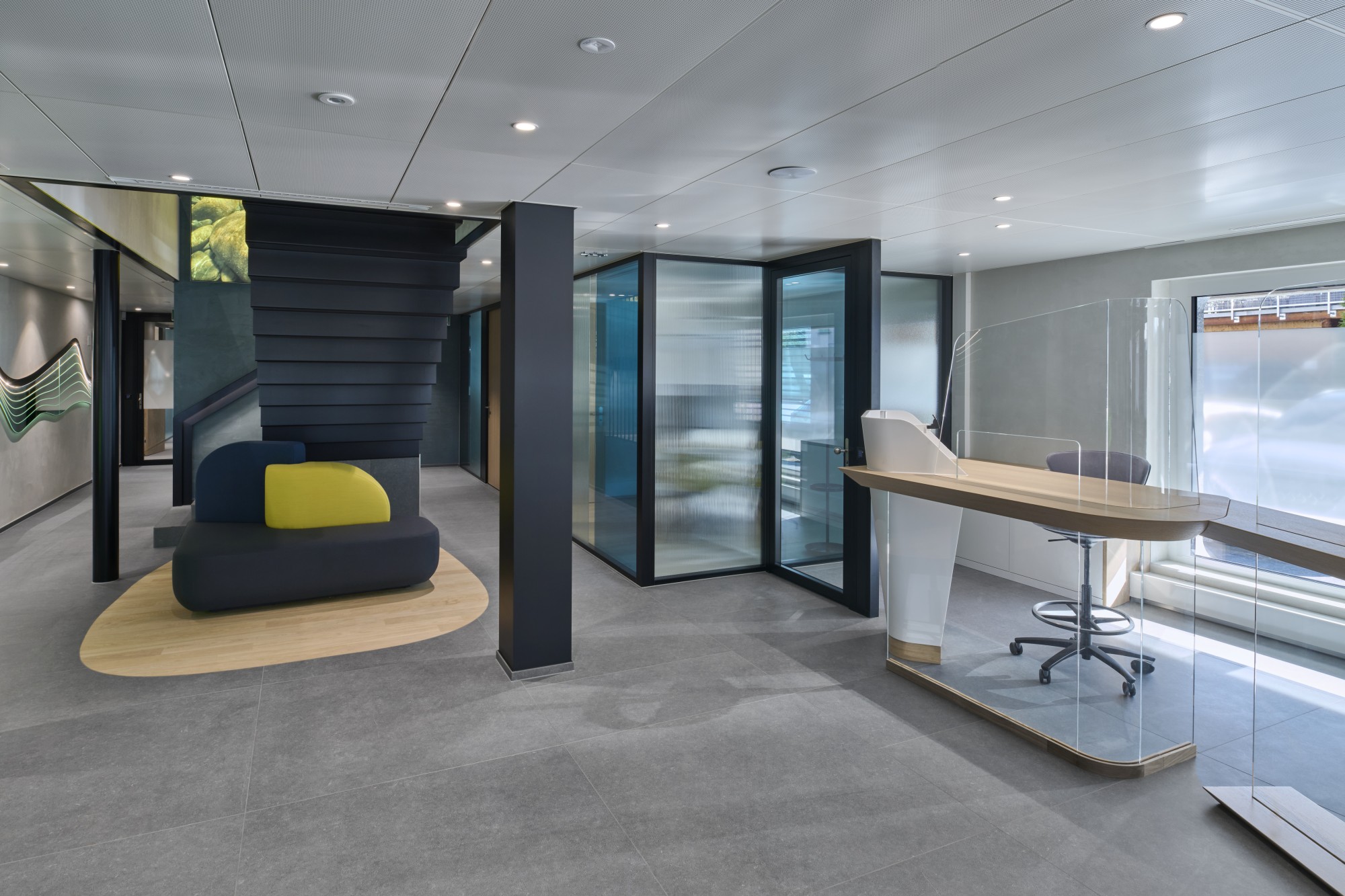
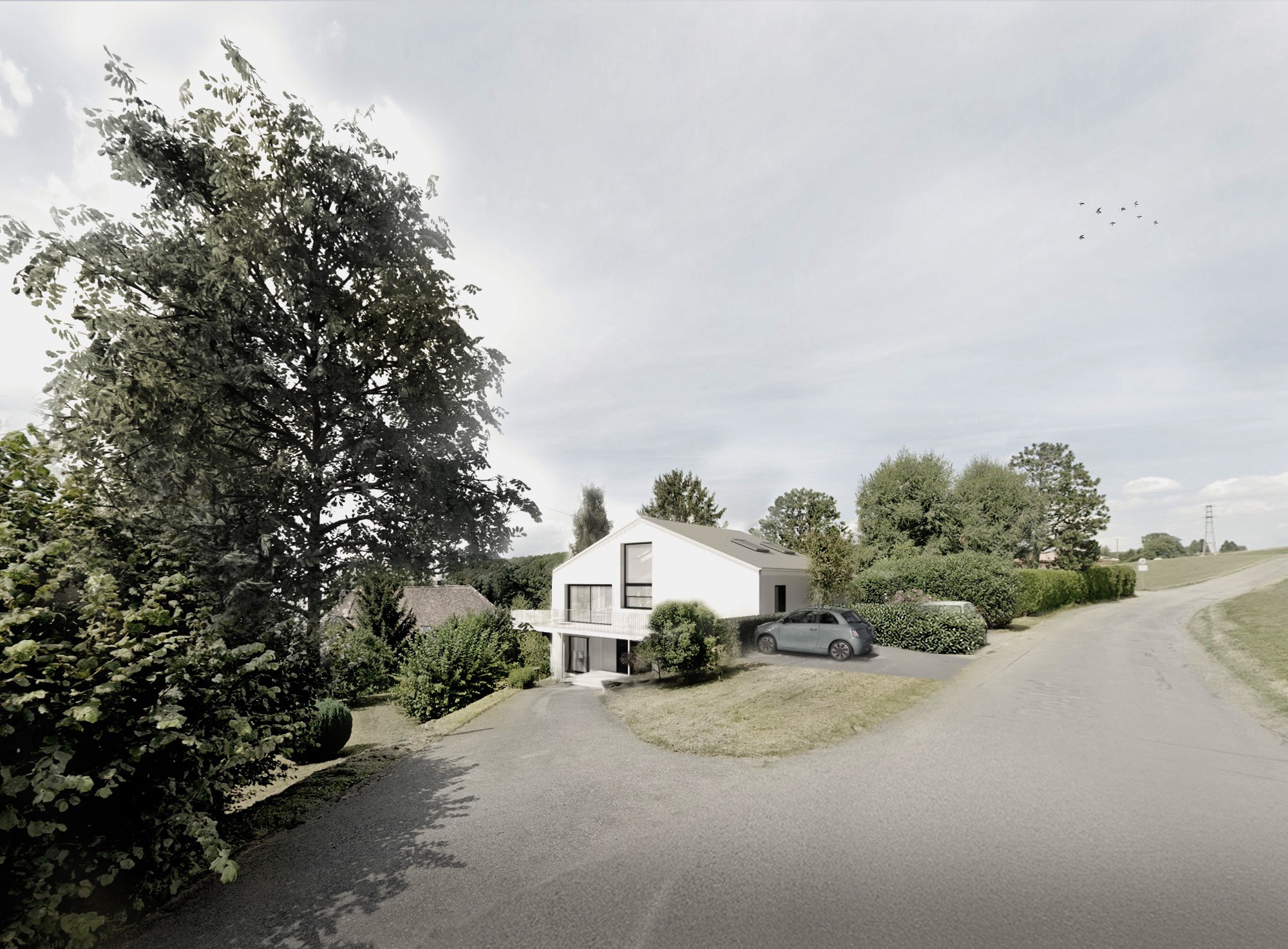
With its small and large honeycomb-style openings and a boldly cantilevered canopy that offers generous protection, the Guin / Düdingen branch is, above all, a beautiful piece of architectural heritage from the 1980s. Our first move was to shift the entrance door “by one window”, so to speak. This shift made it possible to rethink circulation in a way that responds to new patterns of use. The result is a shared entrance giving access to the 24/7 ATM area — a fully transparent, airlock-like space that also opens onto the interior of the building.
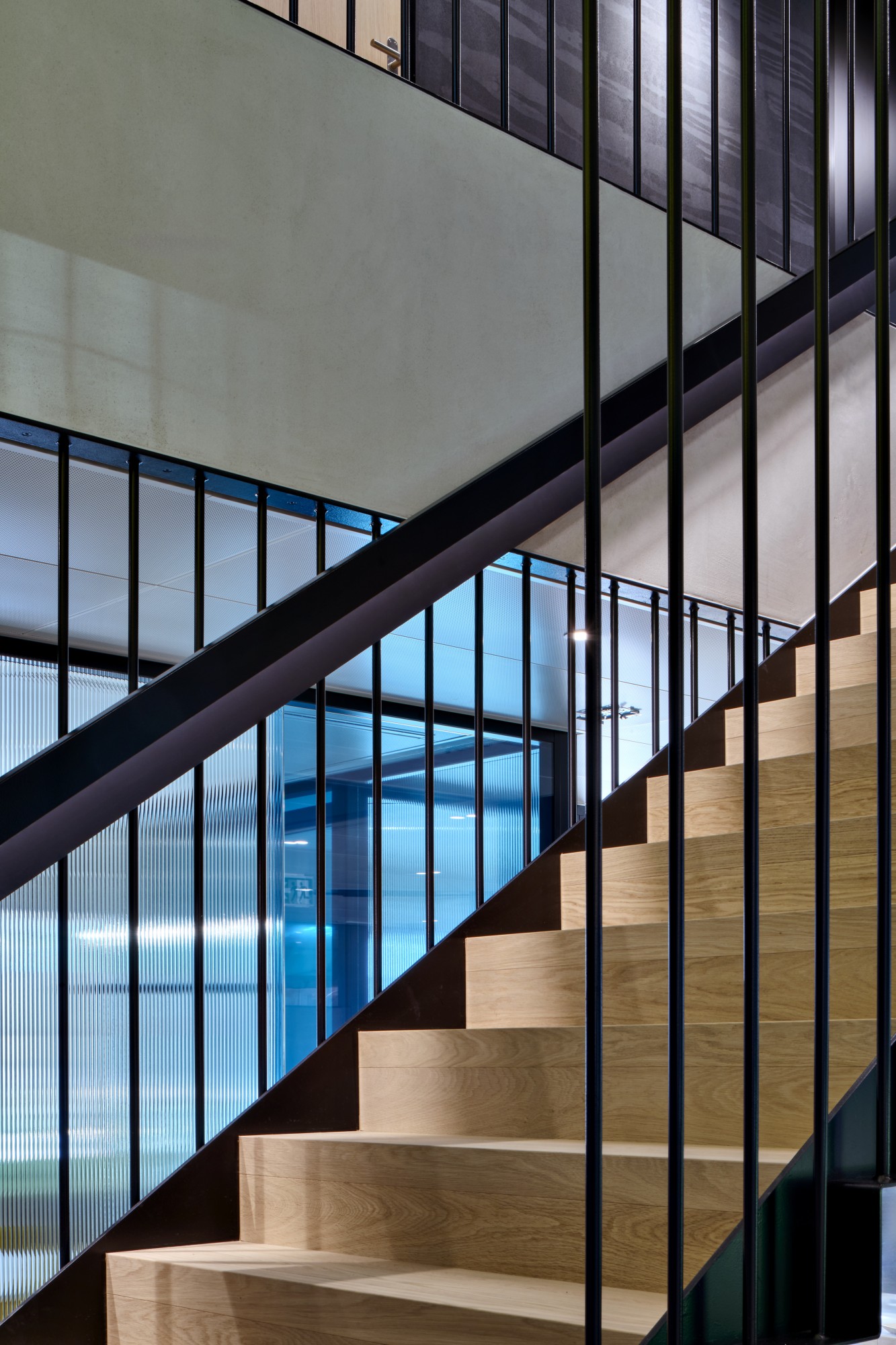
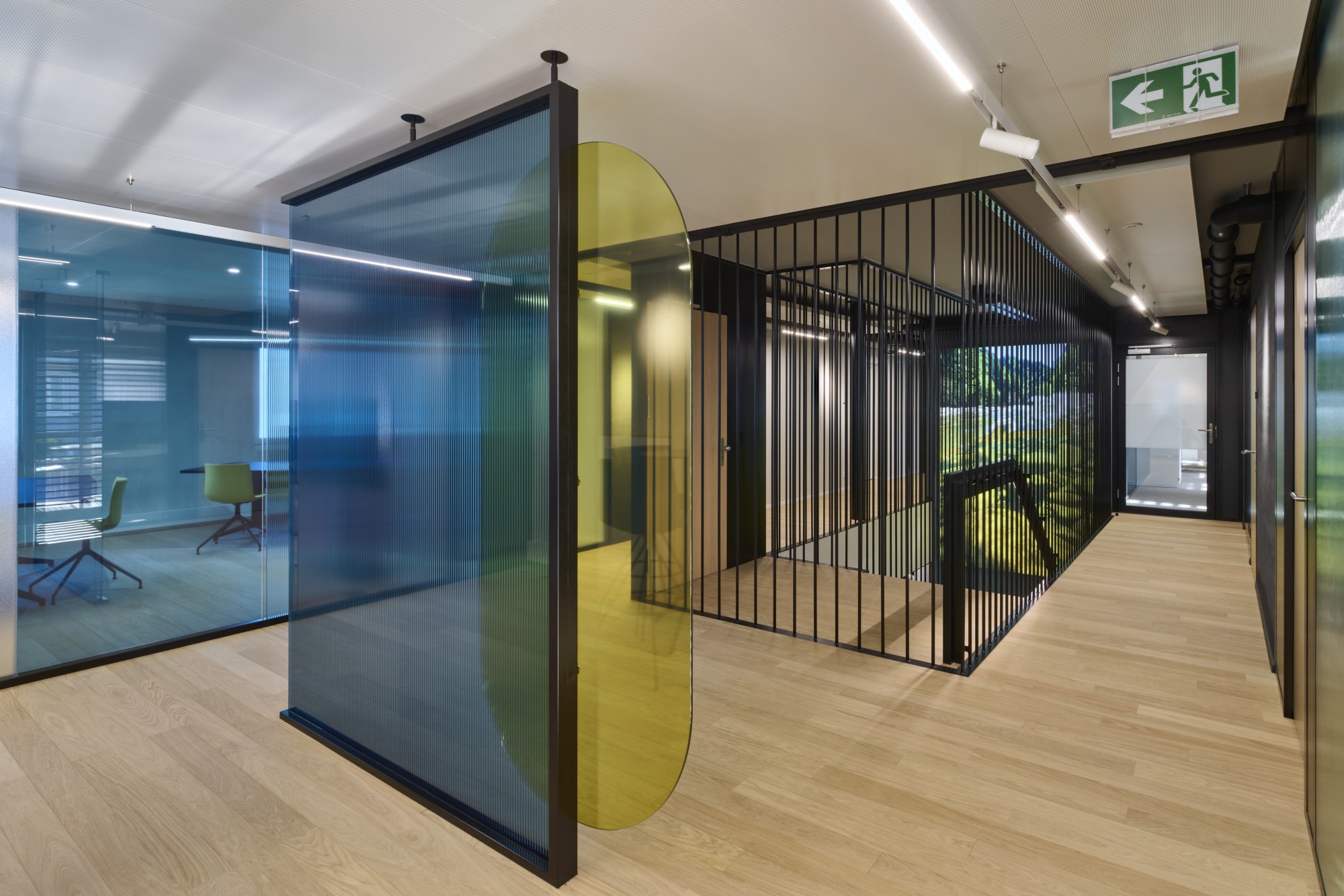
Whilst the building’s original layout had the cantonal bank on the ground floor and a medical practice on the first floor, the most significant aspect of our redesign was to connect the two levels, which are of comparable size. We sought to create a sense of continuity by inserting an internal staircase, creating a clear distinction between the services provided – to put it simply: public functions below, private above. This newly created void allows light to flow freely from one floor to the other. In many respects, the project became an exercise in “staging” this staircase. It begins as a grounded plinth composed of a small series of white steps, symbolically anchored to the ground floor, which is then extended by a seemingly suspended metal stair. This structure, protected by railings, provides access to the upper level.
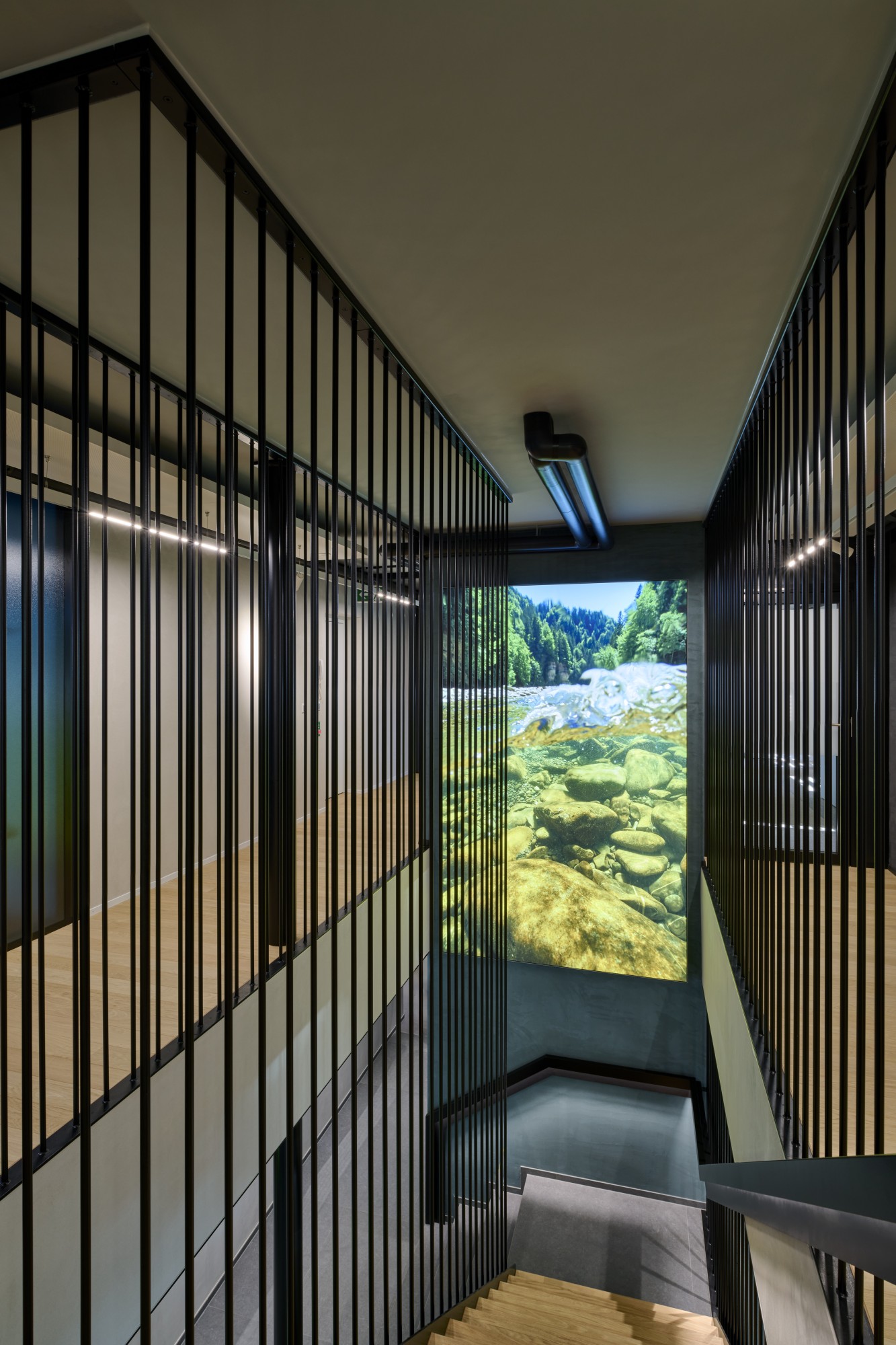
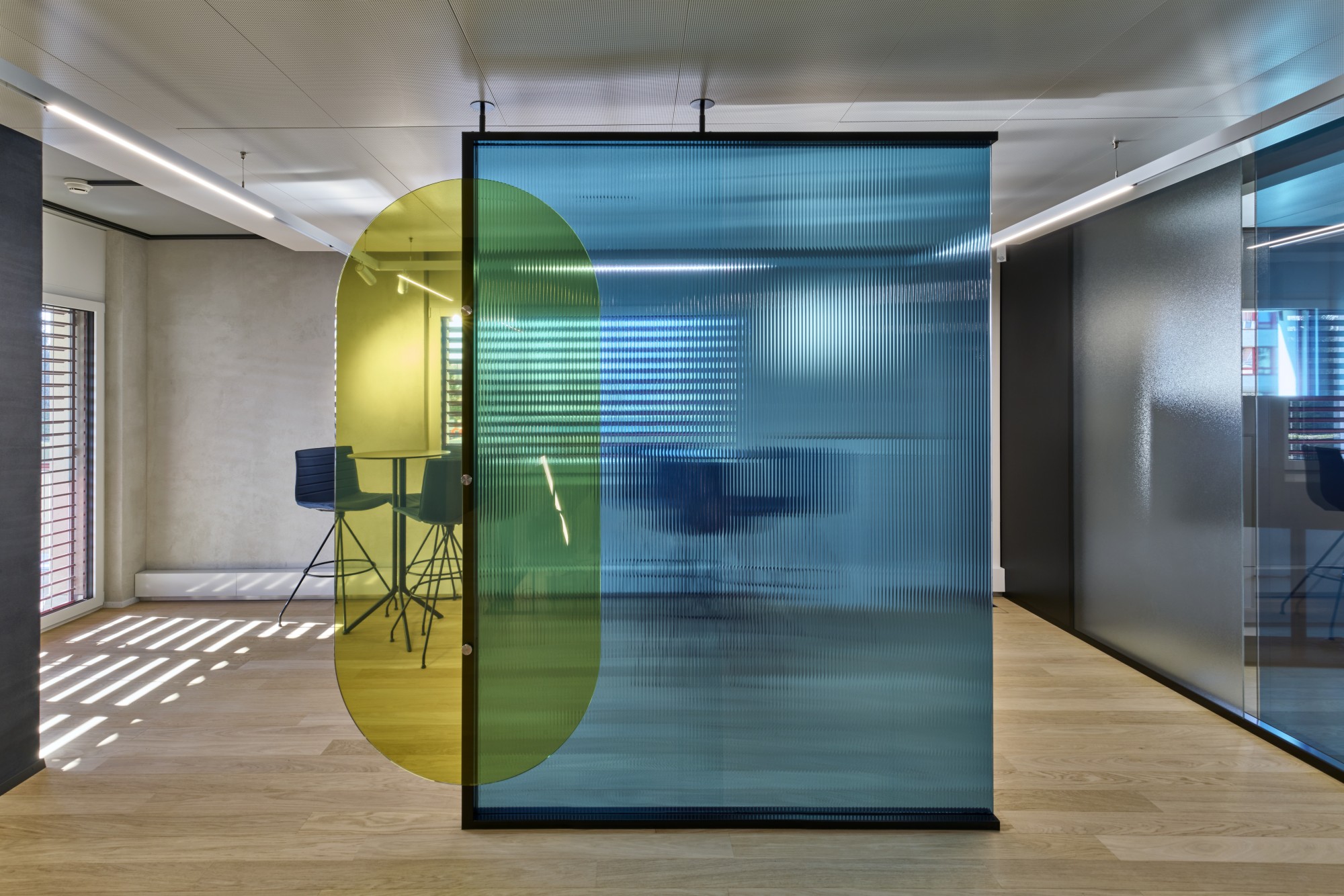
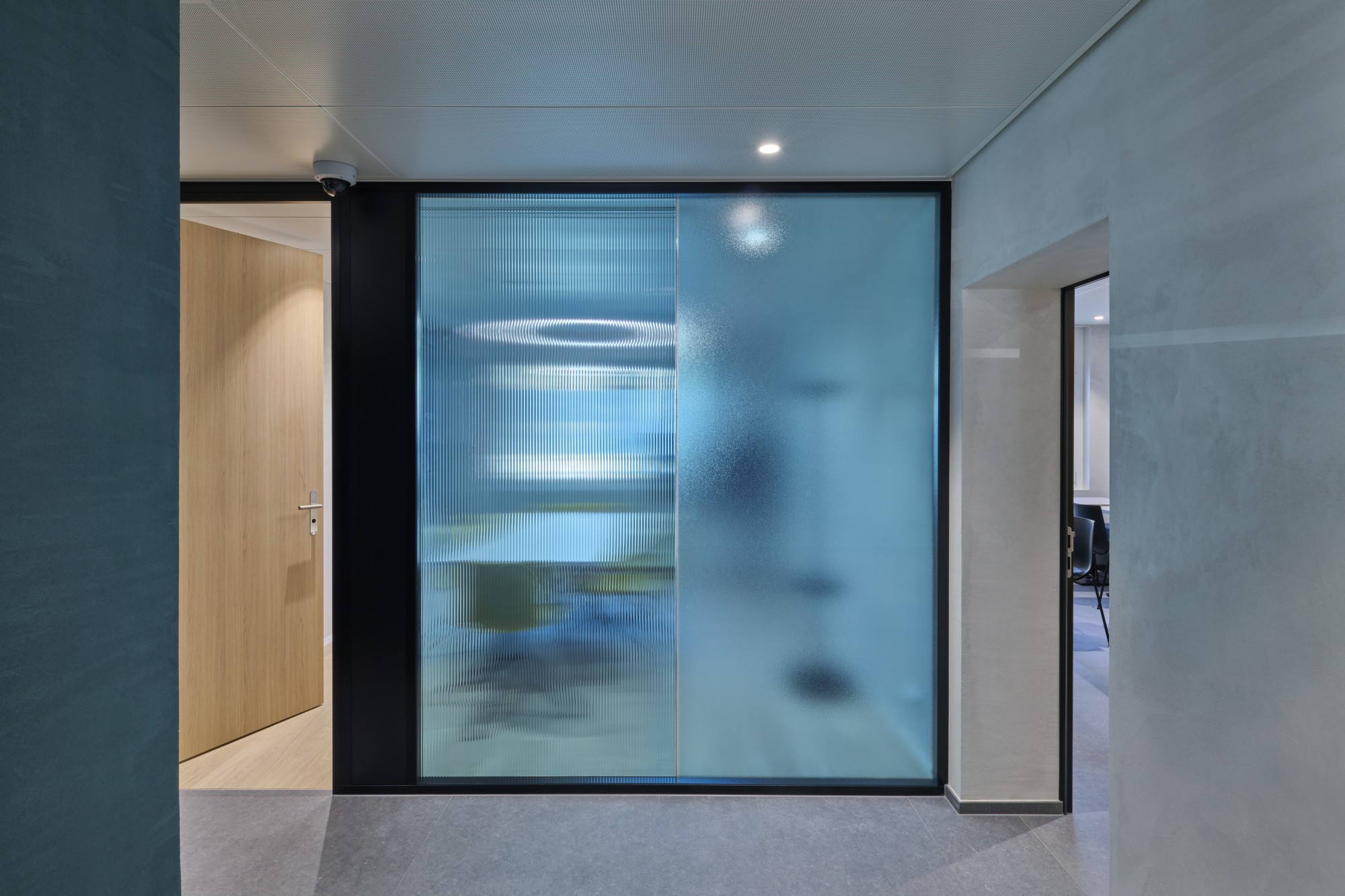
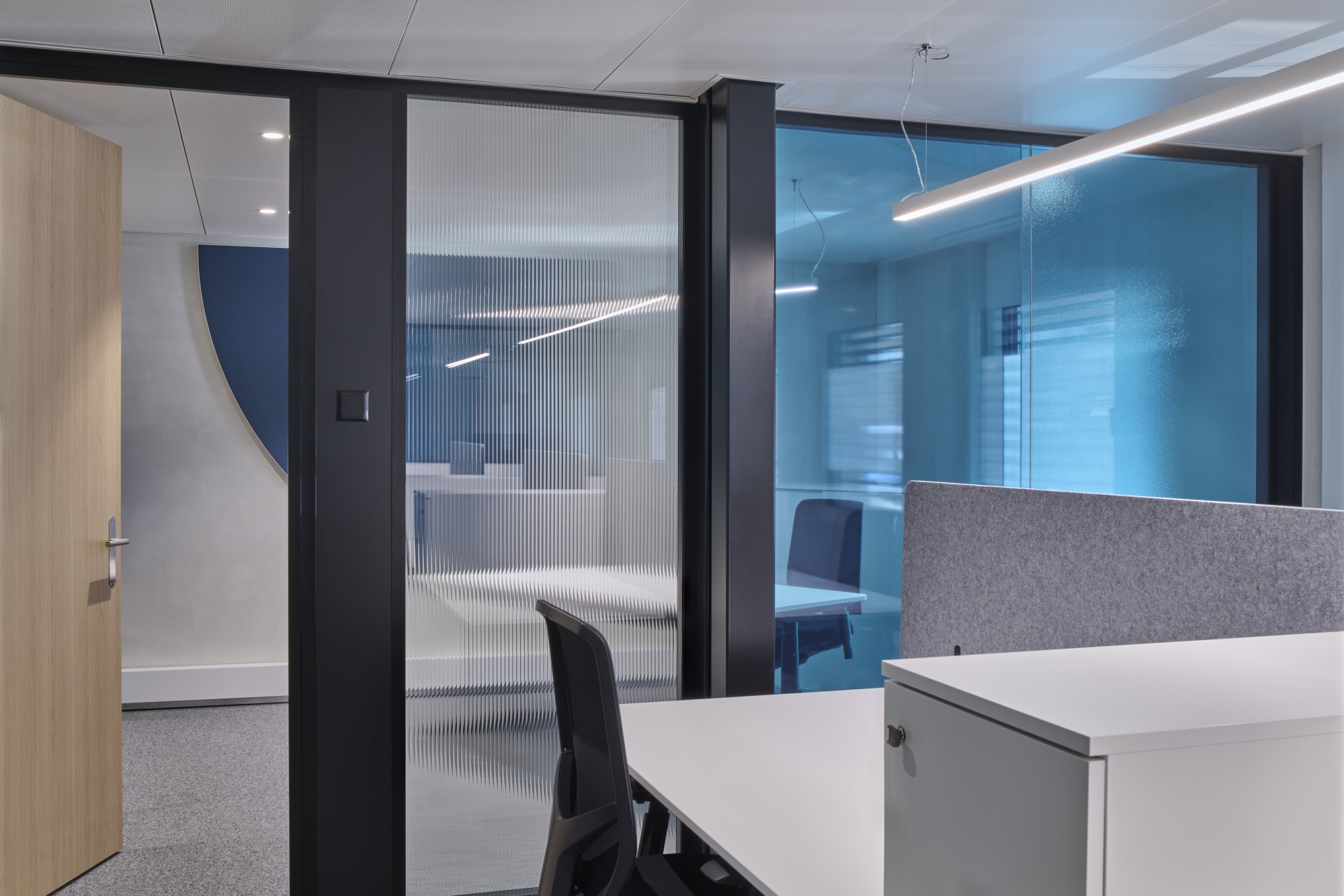
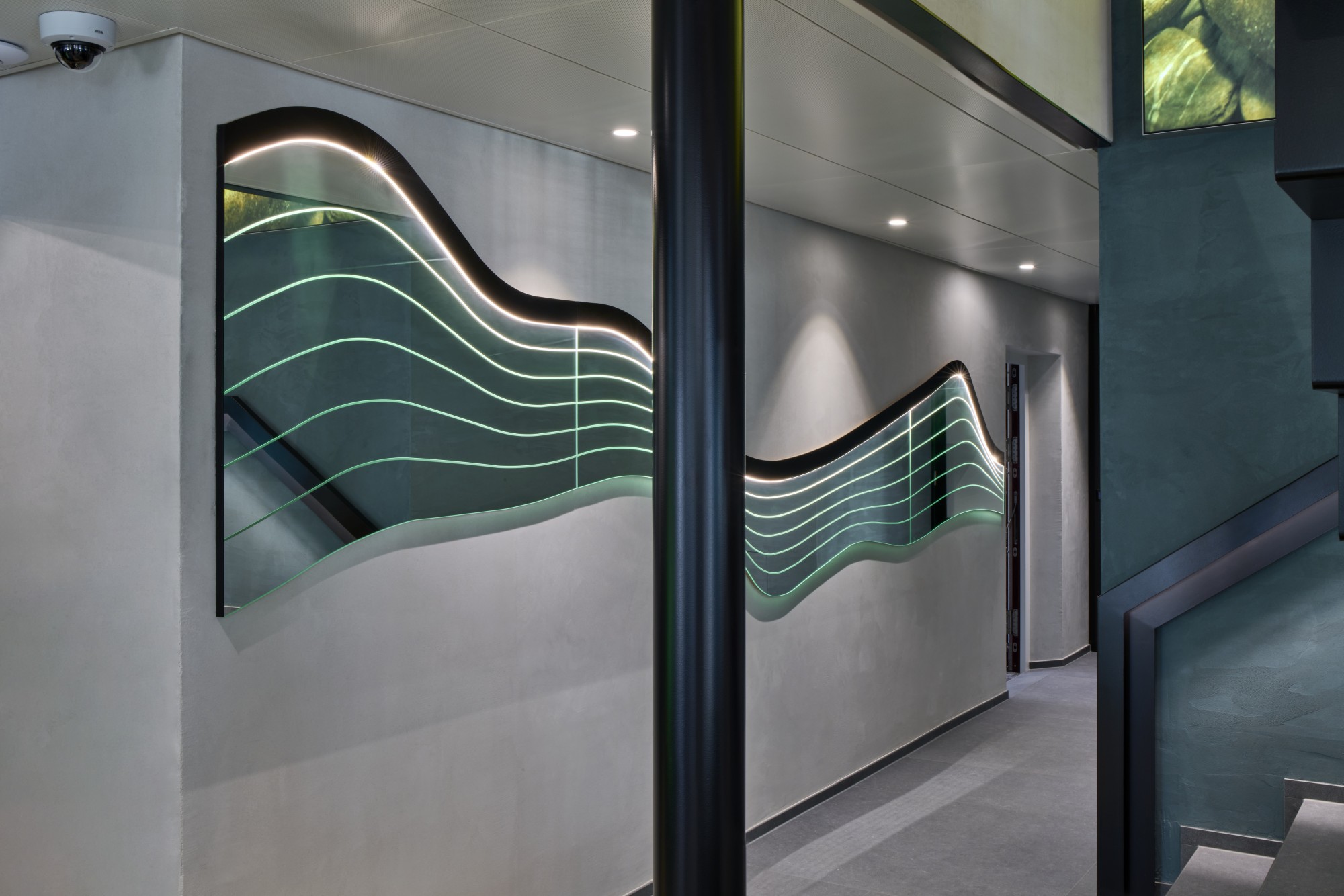
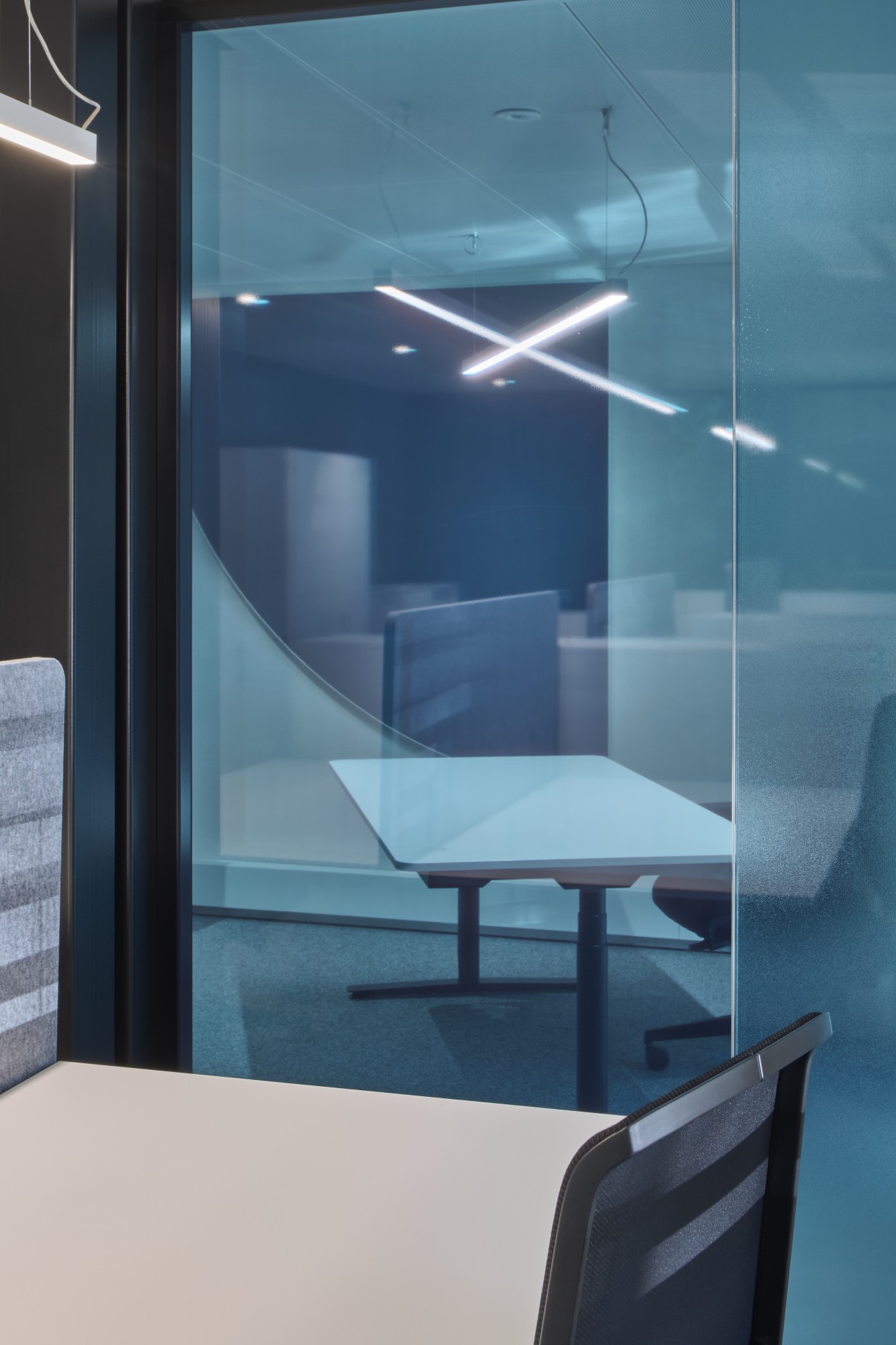
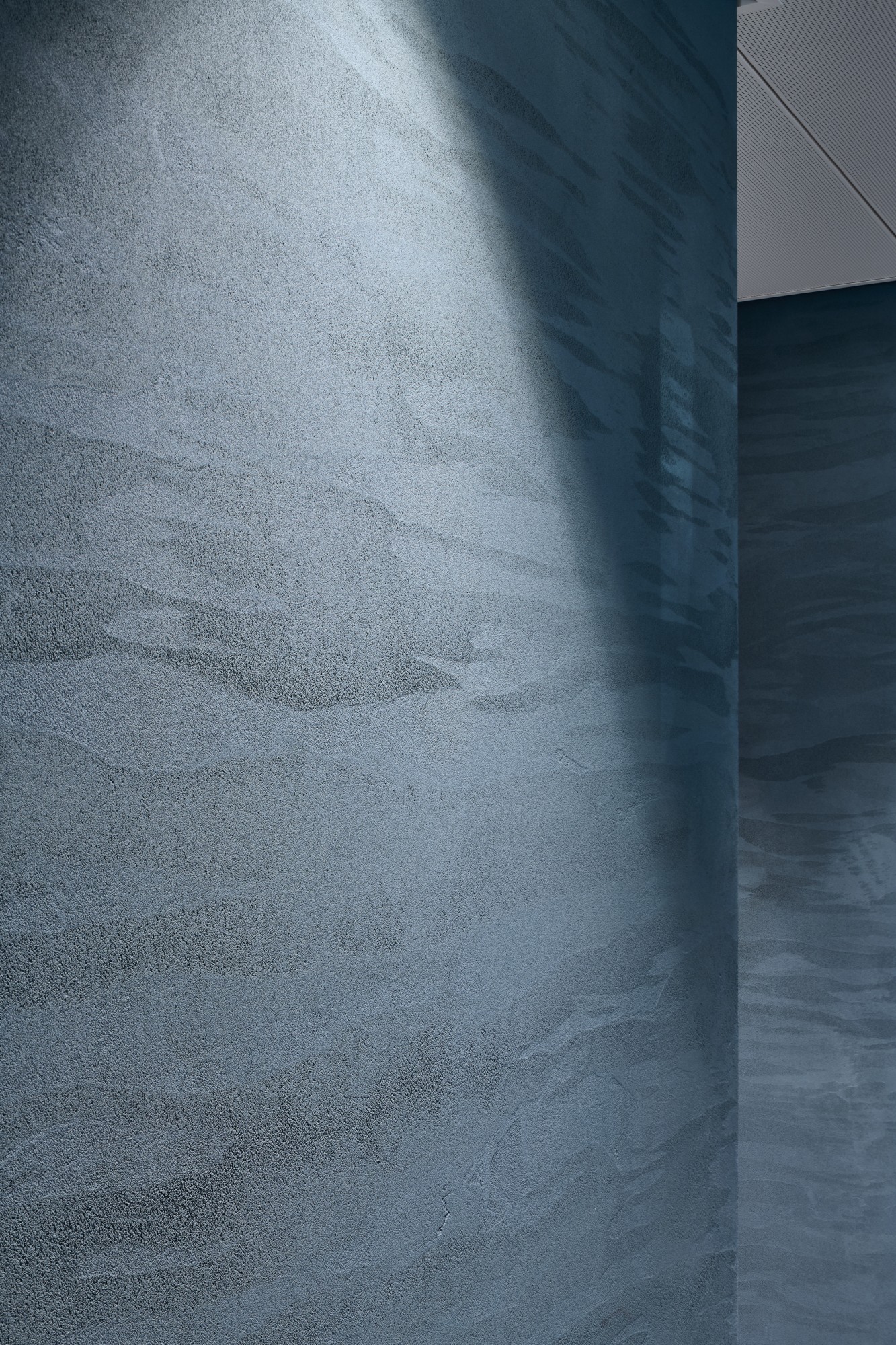
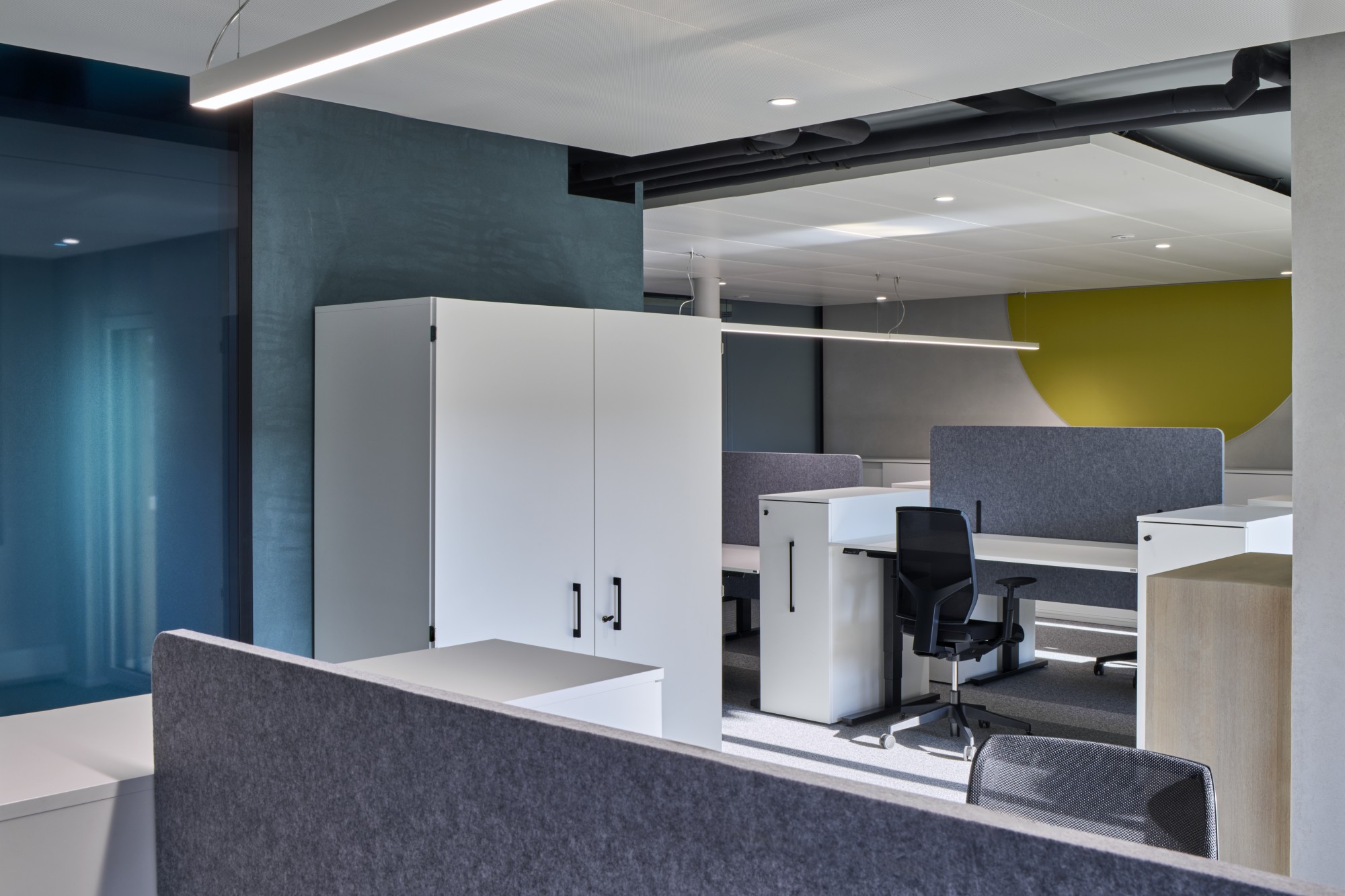
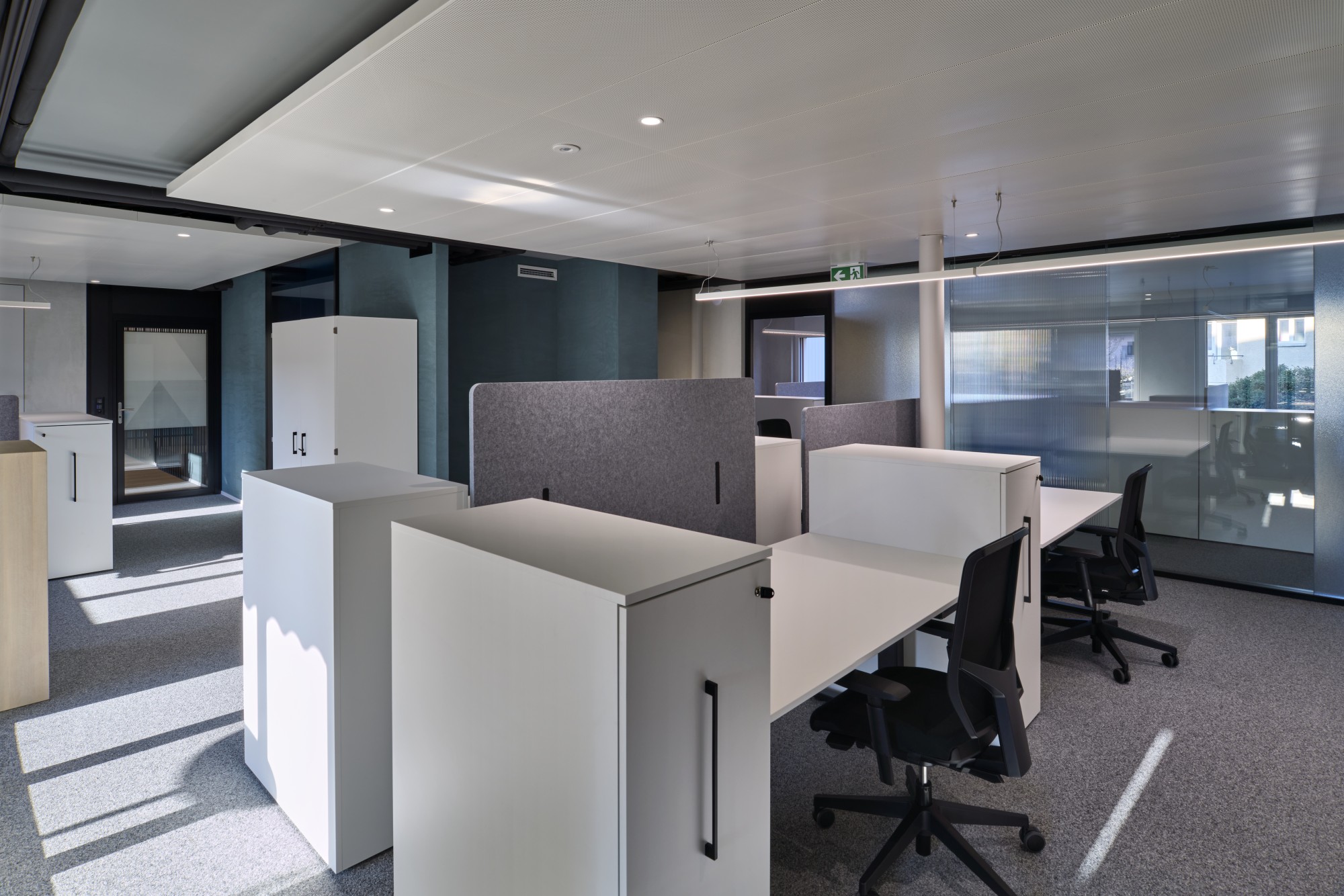
Transparency was the driving force of this transformation. The Sarine – the river that runs longitudinally through the canton of Fribourg – and the symbolism associated with water served as our guiding principle, foregrounding the building’s roots in the region. Mirrored, fluted and orange-peel glass partitions were used to explore different levels of transparency, enabling a careful calibration of privacy. Usedfor meeting rooms and informal spaces, these various typologies offer different degrees of permeability and intensity, echoing the shifting conditions of water as it moves along its course. In the ground-floor corridor, adjacent to a mirrored installation that evokes the omnipresent Sarine, visitors encounter a large-scale image by Michel Roggo, a Fribourg-based photographer known for his freshwater underwater photography. Roggo works at the threshold between surface and depth – proposing an alternative understanding of boundaries, a theme explored across multiple layers of this project.
In the public areas, the reception desks and waiting sofa were designed and fabricated specifically for the project. The furniture adopts an organic language – visually suggestive of rocks and pebbles – at times partially screened by sea-green partitions. Any sense of roughness, however, has been carefully eased away, so that what remains is a reassuring presence designed to welcome and serve. The approach to drapery and painted finishes extends the original aim: an environment that is immersive yet permeable – enveloping without ever becoming insular.